
Myra Albert Wiggins
And a bit of an update about Women Who See.

I am a little bit behind with Women Who See this month. Life is busy and writing things up is taking longer than I had hoped. However, I have been busy researching and visiting museums and galleries - exploring the wonderful and exciting world of women photographers. This article is about the brilliantly talented photographer Myra Albert Wiggins - I imagine some will know her work but many will not - as with a lot of women photographers, she has gone unnoticed for many years within photo history. I hope this small piece will introduce her work to some of you and if you are familiar, I hope you enjoy revisiting her beautiful photographs.
Thank you as always for your generous time and support and I look forward to sharing more amazing women in the coming weeks.
Myra Albert Wiggins (1869-1956)
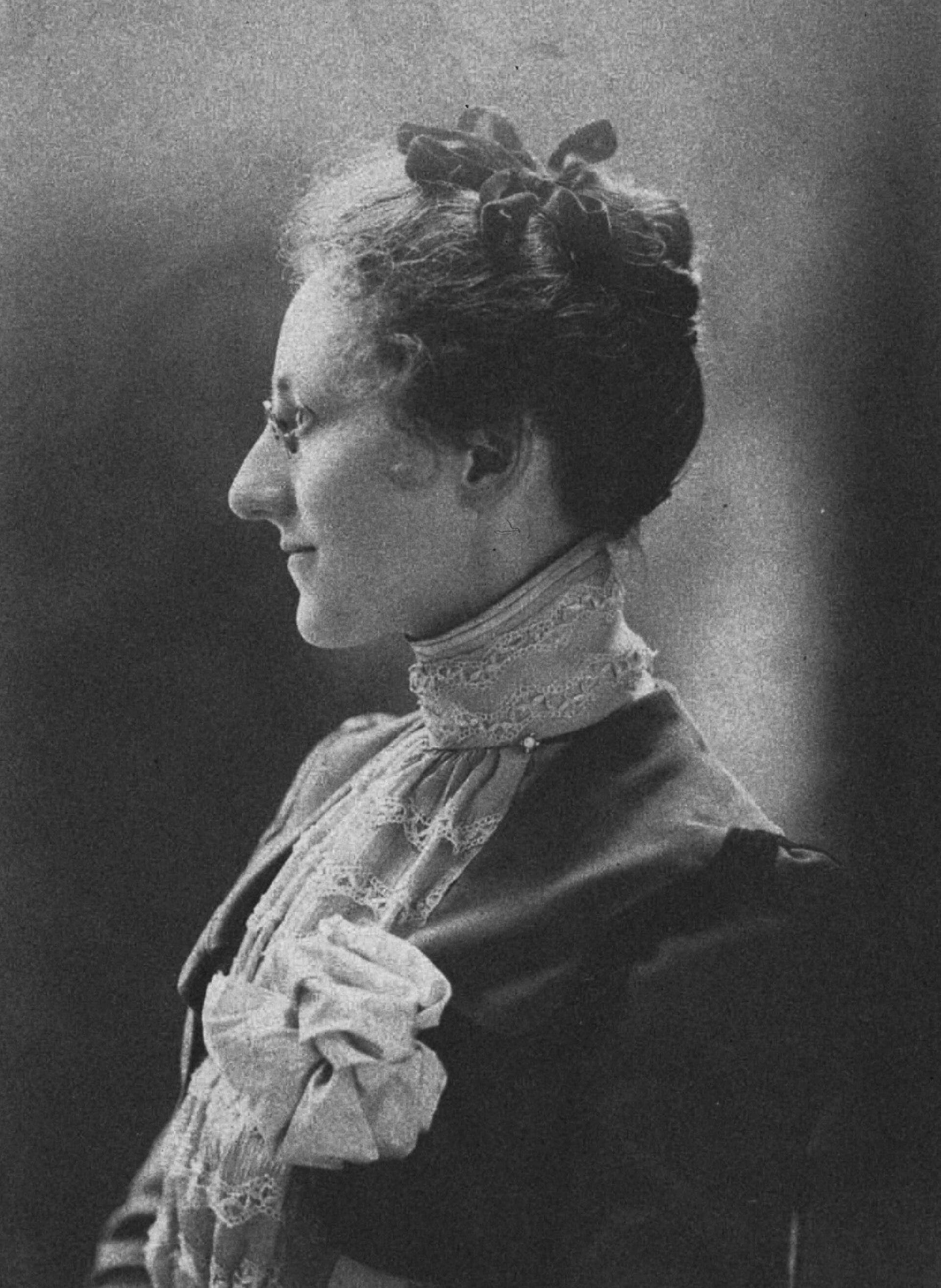
Myra Albert Wiggins (1869-1956)
At the beginning of the twentieth century, the photographer Myra Albert Wiggins was a leading participant of the photographic movement, Pictorialism. Born 1869 in Salem, Oregon in the United States, Wiggins had a passion for art and went to college to study it. At this time she developed an interest in photography along with her brother - the two of them bought a camera together.
In 1891, Myra moved to New York to study painting at the Arts Students League and pursued her interest in photography. A path that echoes other photographers including Alice Boughton(1866-1943) and Gertrude Käsebier (1852-1934) who both went to art college to become painters but went on to become photographers. However, unlike Boughton and Käsebier, Wiggins would paint for most of her life.
As well as attending college, Wiggins joined the Society of Amateur Photographers and New York’s Camera Club - unlike Alice Austen (1866-1952) who refused to join any kind of photographic club.
Whilst in New York, Myra met the photographer, Alfred Stieglitz(1864-1946) - forming a friendship based upon their mutual respect of their photography. In 1903, Stieglitz invited Wiggins to join the influential Photo-Secession Group in which she exhibited with them, thus confirming her reputation both nationally and internationally.
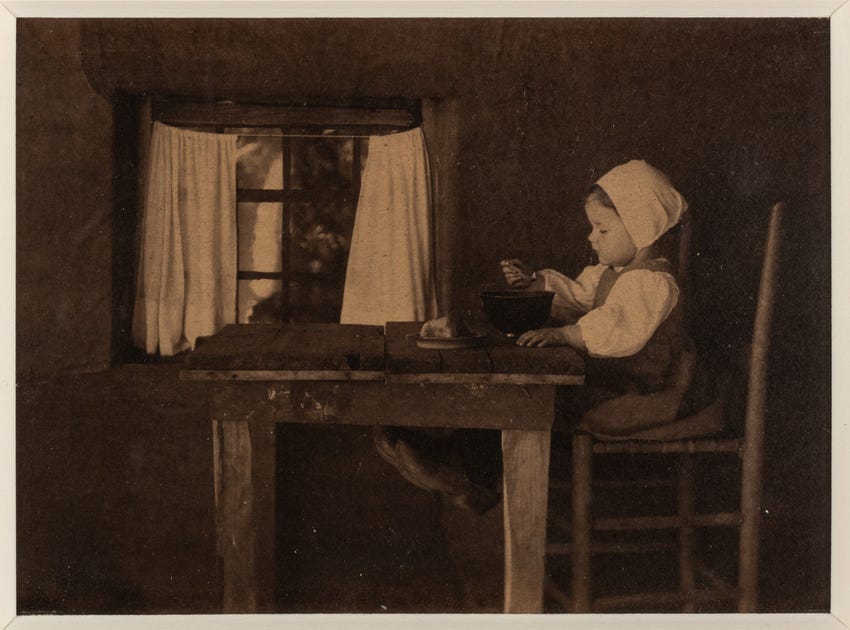
Throughout the 1890’s right through to the 1910’s Myra was the recipient of many awards for her photography - prizes that included cash and cameras. One such award was for her beautifully evocative, if somewhat sentimental photograph, Hunger is der Beste Koche, made around 1899. The image is of her young daughter, dressed in Dutch costume, sitting at a kitchen table, eating a bowl of porridge. This beautifully poignant image works, not just as a work of art but technically too. I sometimes think we forget the hours spent mastering some of these techniques - especially processes such as bromoil, carbon printing, platinum and photogravure. The lighting is exquisite and resembles that of the Dutch masters - something that Wiggins was interested in as a painter. I think we can see her painterly skills reflected in her photography.
Pictorialism falls in and out of favour. I know many that dislike it - it is seen as sentimental. Many favour photography to be ‘straight’. I love both and think there is room for both and it is what makes photography so exciting. There is no doubt that Wiggins’ photos are emotional and sentimental but they are open to interpretation and that is powerful.
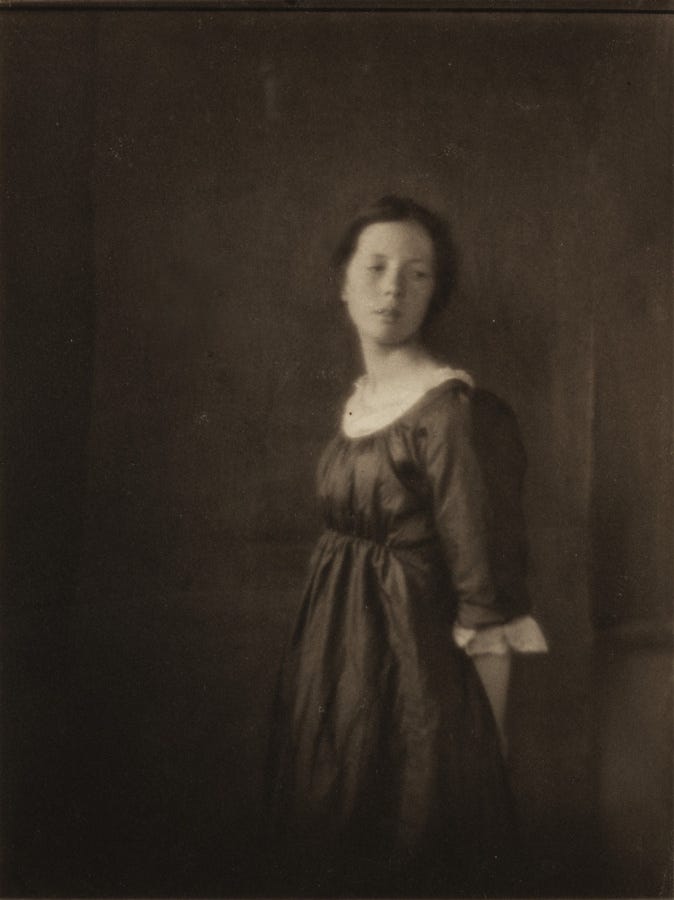
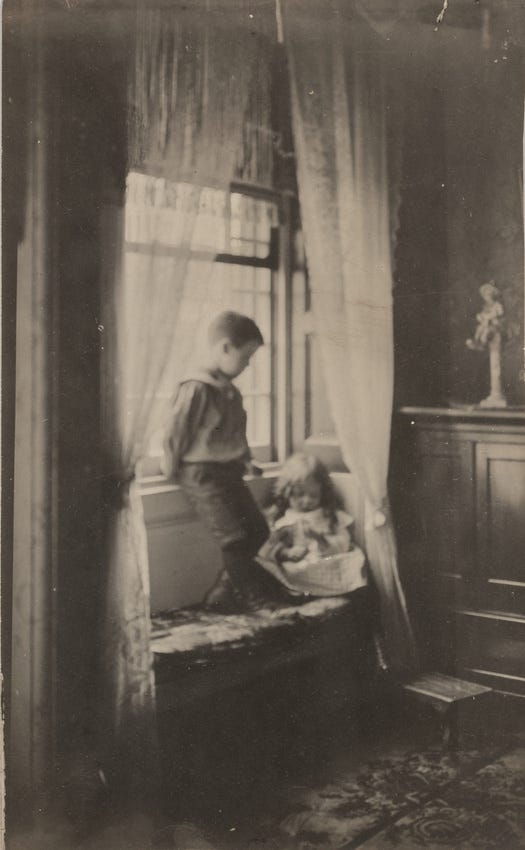
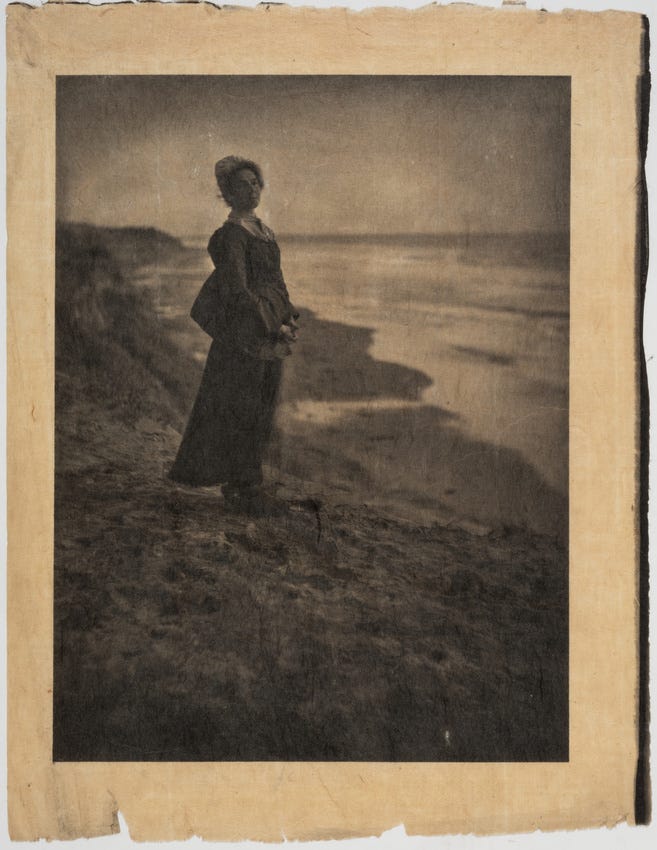
I also like to reimagine the woman behind the camera. I often think of them setting up the image - working out the light and their exposure times. Then, off to the darkroom to develop their plates or film and begin the often laborious and challenging photographic printing - processes that bring their vision to life. These women are incredibly skilled. I understand as someone who has worked with some of these processes and large format cameras, that this can be a long drawn out process and sometimes exhausting and frustrating. And yet, Myra produced the most exquisite images - full of beauty and emotion - images that require one to stand and look deeply and ones that you return to again and again.
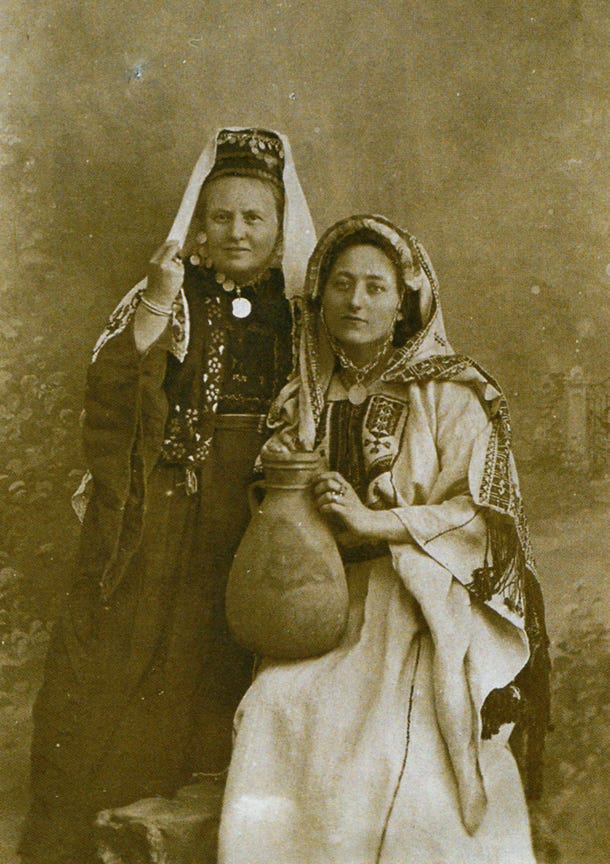
Whilst researching Myra Albert Wiggins, I came across a copy of her ‘Letters from a Pilgrim’ where she writes about her adventures to Jerusalem in 1904. Myra was selected to go on a Christian pilgrimage to Jerusalem; she would attend the World’s Fourth Sunday School Convention. For Wiggins, however, this was not just a pilgrimage of faith, it was also an opportunity to photograph and attend some photographic exhibitions in Europe, including London, Paris and Bradford.
I have to admit that when I saw that she went to an exhibition in Bradford, I was intrigued. On Wednesday, May 26, Wiggins writes; We are spending the night here at Bradford where we arrived at 4.30 this afternoon. I came to see the Photographic exhibition, as it is an important one.1 The exhibition in question was the 1904 Bradford exhibition - a six months civic event in Lister Park that ran from May until October. In this exhibition, photography played a significant role and showcased the work of Edward Stieglitz and the Photo-Secession group. Wiggins makes no mention as to whether her work was included. The exhibition wasn’t just about photography, it also included a controversial and rather outrageous ‘Somali village’ in which 57 Somali men, women and children were exhibited as if in a human zoo - it was seen as one of the main attractions with an estimated 350,000 visitors.
However, a few days later Myra Wiggins arrives, with her friend Mrs Park, in Paris in which they attend another photographic exhibition - this time at the Photographic Salon. To her surprise she finds that her work is on display and her name is in the catalogue. Stieglitz had not told her that she would find her work in this exhibition and although she was gracious in her response, I personally question why he did not tell her. As a photographer myself, I understand how one can feel a certain sense of loss of control once it goes out into the world and I certainly feel that Stieglitz has a lot of control over her work here. Wiggins writes:
I crossed over to the Petit Palace, to the Photographic Salon and there I stayed until it closed at 6 o’clock. As I paid my franc and entered I picked up one of the catalogues which were for sale near the door and in my best French asked the girl if the American work was listed in it, she answered yes, so I bought one and started in. You can imagine my surprise when I found that two of my pictures were hung and catalogued. I did not recognize them by their French names at first but soon puzzled them out, “Still Life” and the other one, “The Edge of the Cliff” the girl found for me.2
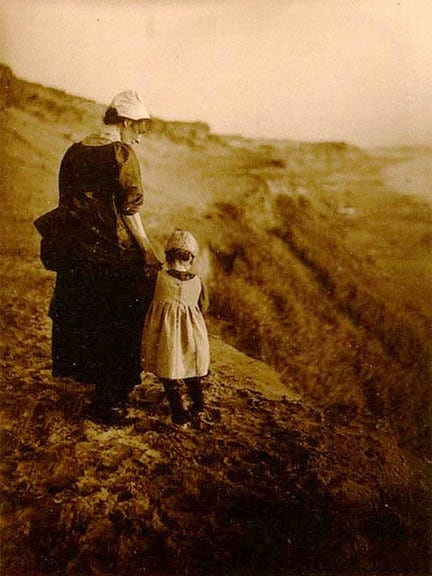
I think that it is interesting to note that during this period of Wiggins’ life, she was married with a child. I find it really heartening that she is still holding onto her identity as a photographer and artist as well as being a mother and wife. Throughout this trip, Wiggins would write and photograph her adventure - often developing her film back at her room late into the night. On June 12, Wiggins arrived back in New York, having travelled across Europe as well as Turkey, Greece, Algeria, Malta and Jerusalem.
In 1907, Myra’s husband Fred started a plant nursery and the family moved to Toppenish, Washington. At this time, Myra decided to set up a studio to help with the family finances, but from now on, she devoted herself to painting rather than photography. However, she did continue to exhibit her photography for many years to come.
In 1930 she co-founded the Women Painters of Washington in which she gave classes and lectures. In 1932 the family moved yet again - this time to Seattle, Washington where she would see out the rest of her life. Myra Albert Wiggin died in January 1956 - she continued to paint up until her death.
Although Myra Albert Wiggins is not the most known photographer today, I think she is worthy of celebrating and should be more recognised. Thankfully, her legacy is having a revival with the Musée d’Orsay acquiring her work and exhibiting it earlier this year. Her work is also held in permanent collections across the United States, including the Getty Museum and the National Museum of American Art.
1) Myra Albert Wiggins Letter From a Pilgrim p.159
2) Myra Albert Wiggins Letter From a Pilgrim p.161
Lovely post! Considering the time, and Stieglitz’ strangle hold, it is admirable to read how this lady soldiered on and made some beautiful photographs. I was at Photo London a couple of days ago and left feeling alternative and historical methods of printing are on the rise. I look forward to seeing where it goes? Is there a book of Wiggins’ work? Excellent post! Many thanks….
Another fascinating post. What a talent she was. I love some of the images you shared here. I was not aware of her or of Stieglitz. I loved that Bradford was in the story as a venue for a photographic show. Thanks again for another episode in this brilliant series.