
Julia and Me.
My journey as a photographer using the wet plate collodion process.

I am busy writing about Julia Margaret Cameron at the moment, but before I post it, I thought I would write a piece about the impact she has had on my life and work.
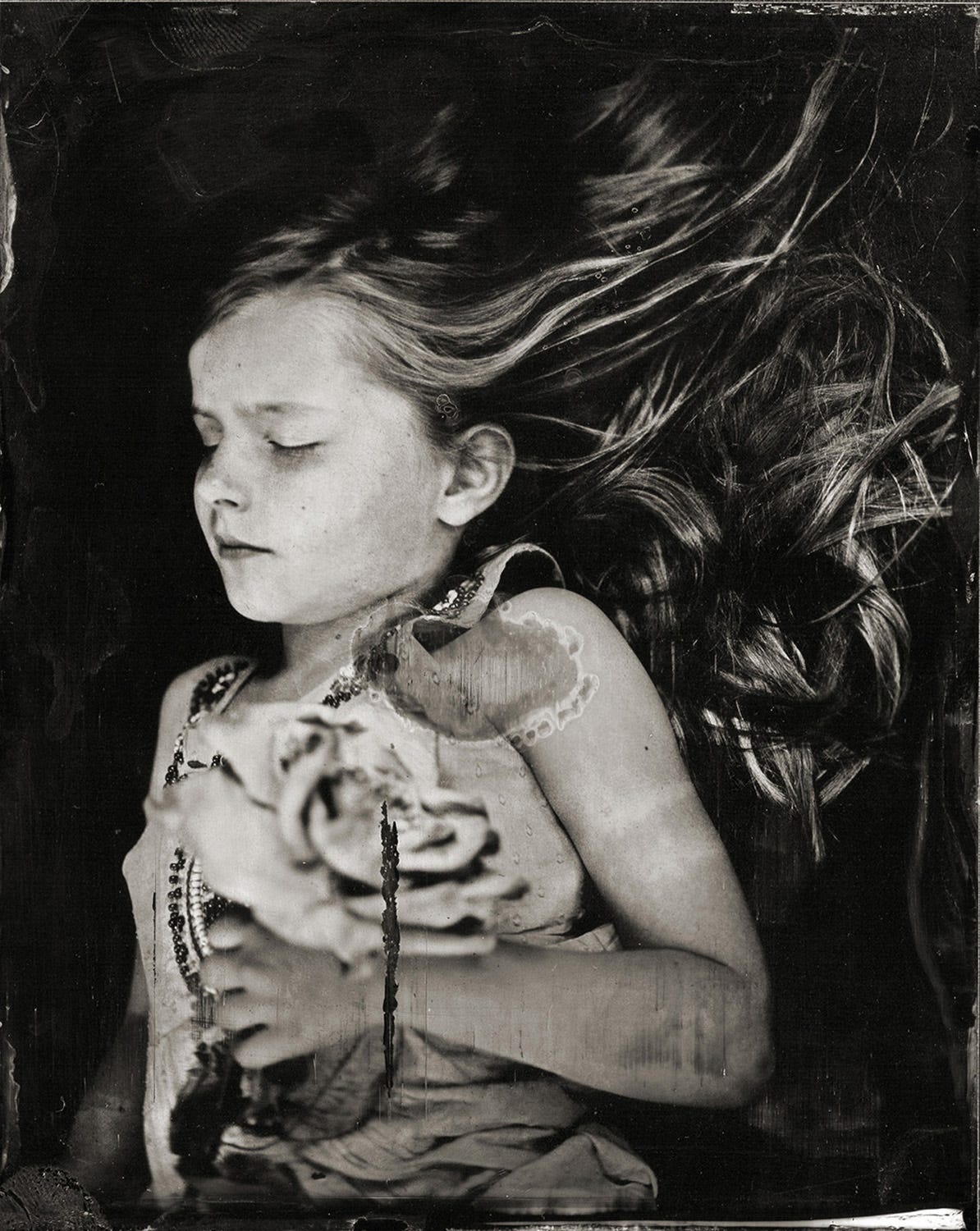
I have recently been thinking about how I was introduced to the Victorian photographer, Julia Margaret Cameron and about my own path as a wet plate collodion photographer. In 2003 I went to see an exhibition of her work at the National Portrait Gallery in London - I remember it well. It was astonishing, it was beautiful and it changed my life in a way that at the time, I could never have envisaged.
I was a mother of a one year old at the time - he never slept and I was exhausted. I was working in adult education and I first heard of Cameron through one of the courses I was teaching - Wanderlust Women, a history of women travel writers. It was the artist, Marianne North who introduced me to her - not literally of course, but through her writings. Marianne was photographed by Cameron when she was travelling in Sri Lanka (then called Ceylon, where the Camerons owned and lived on their coffee plantations). She had written:
She made up her mind at once she would photograph me, and for three days she kept herself in a fever of excitement about it… She dressed me up in flowering draperies of cashmere wool, let down my hair, and made me stand with spiky cocoa-nut branches running into my head, the noonday sun’s rays dodging my eyes between the leaves as the slight breeze moved them, and told me to look perfectly natural (with a thermometer standing at 96 degrees)! Then she tried me with a background of breadfruit leaves and fruit, nailed flat against a window shutter, and told them to look natural, but both failed; and though she wasted twelve plates, and an enormous amount of trouble, it was all in vain, she could only get a perfectly uninteresting and commonplace person on her glasses, which refused to flatter. (A Vision of Eden. Life and Work of Marianne North, Royal Botanic Gardens, Kew)
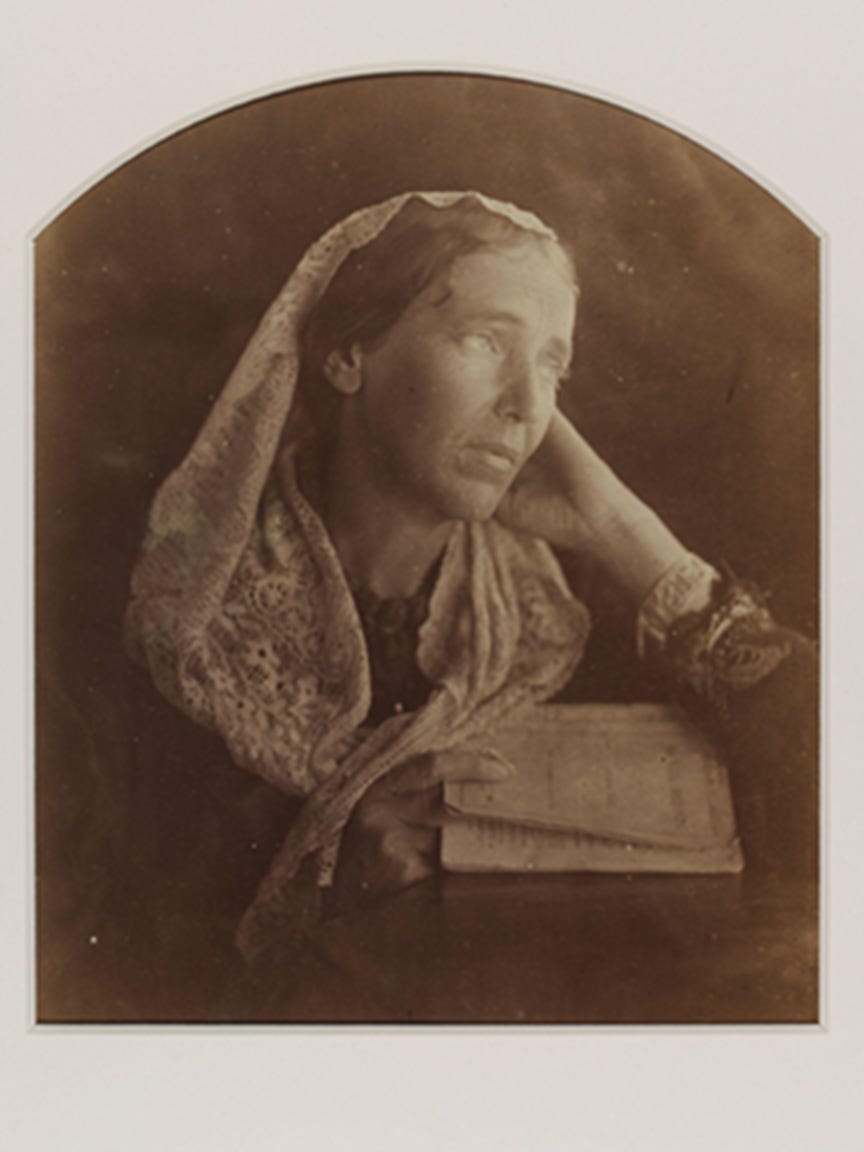
When I read this description of Cameron, I am not surprised that I wanted to know more about this indomitable woman - even more so when I discovered that she was the great-aunt of Virginia Woolf. However, it would be another nine years before I started to make my own wet plates. In between that time I read all the books that I could get hold of, I visited her archives and I even bought prints that to this day still hang on my walls. The idea of making wet plates felt like an impossibility and I had no idea where to start.
So fast forward to 2010. I had already started working with large format cameras - mainly 5x4 and using instant film. I was reasonably proficient in the darkroom but was no master printer and never have been. Social media was gaining ground and I saw some American photographers were starting to produce absolutely stunning plates and some where coming over to the UK to teach it. I looked into it but couldn’t afford it but was pointed in the direction of Carl Radford in Glasgow. So, on my 40th birthday, I went on a workshop and learnt the wet plate collodion process. I was the only woman on the course. Carl was a fantastic mentor and along with John Brewer, they helped me source the chemistry and plates - which wasn’t easy at the time. The chemistry terrified me at first - silver nitrate, potassium cyanide and so on.
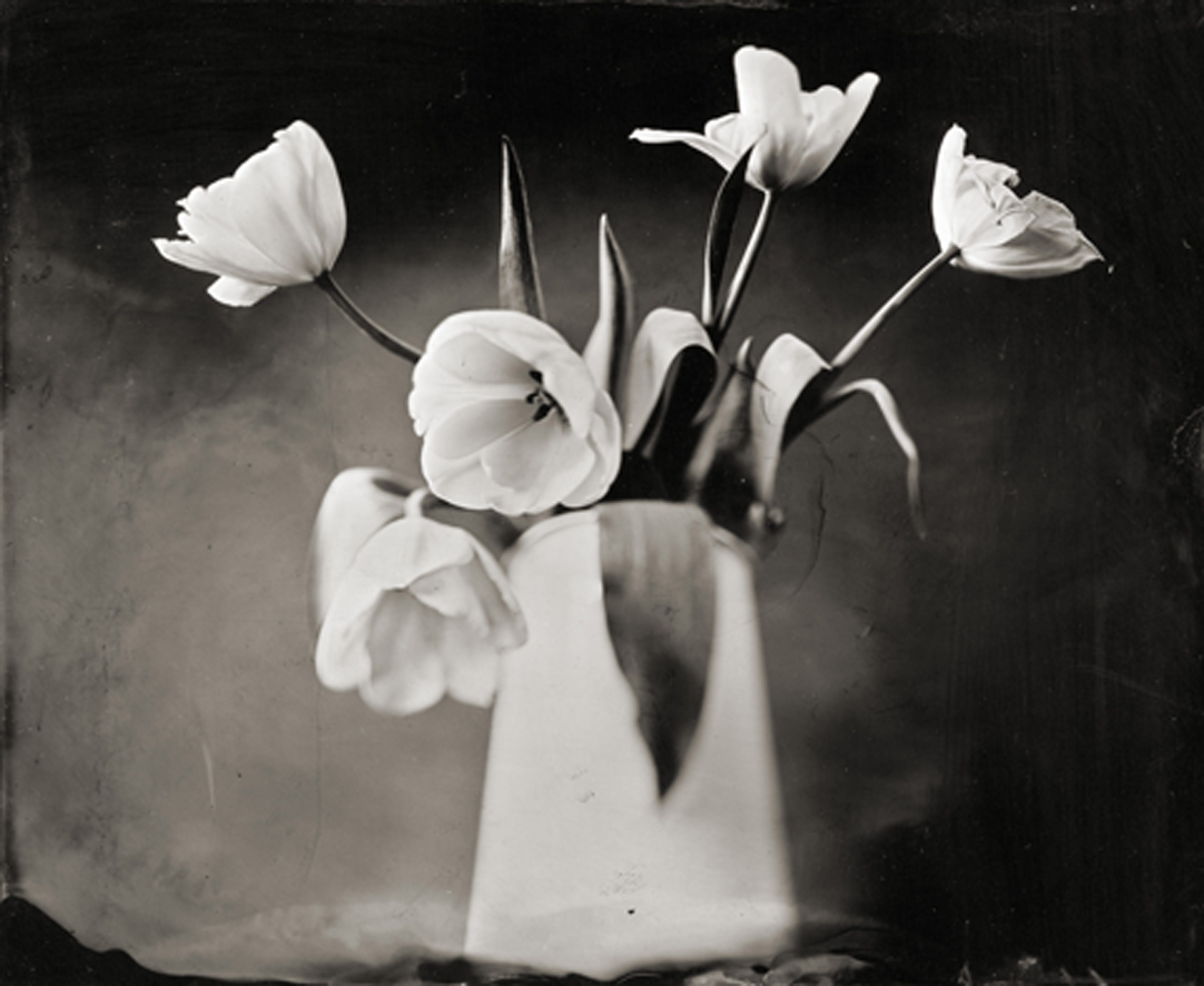
I went home to start making plates and like Cameron, I failed miserably time and again. The success rate was woeful and many times I felt like giving up. I had made the mistake of trying out this new process on my children - who have always been fantastically patient with me, but this was a step too far. As I fumbled around and sweated and failed - I could sense their disappointment with every failed plate. So I decided I would experiment on flowers instead, at least until I could work within a reasonable time frame - enough to keep a 5 year old interested. Once I could work out the exposure time with some kind of accuracy and have full confidence with the chemistry, I started to photograph the children - not just mine but their friends and my friend’s children too.
The next few summers were a frenzy of making plates. I had a small hydroponic tent to develop the plates and I would take that around with me. It was usually set up in my dining room - with the table pushed up against the wall and the kids toys scattered all around. I would also take this tent to my friends’ houses and set it up in their garden - on one occasion the tent came down quicker than it went up when we got caught out with torrential rain. The madness that Marianne North describes is very relatable. However, thankfully, the madness that ensued was mainly the kids and not mine (or so I like to think). The children were collaborators in these portraits - each one could decide how they wanted to be photographed - what they wore (hence the cat suit) or how they posed etc.
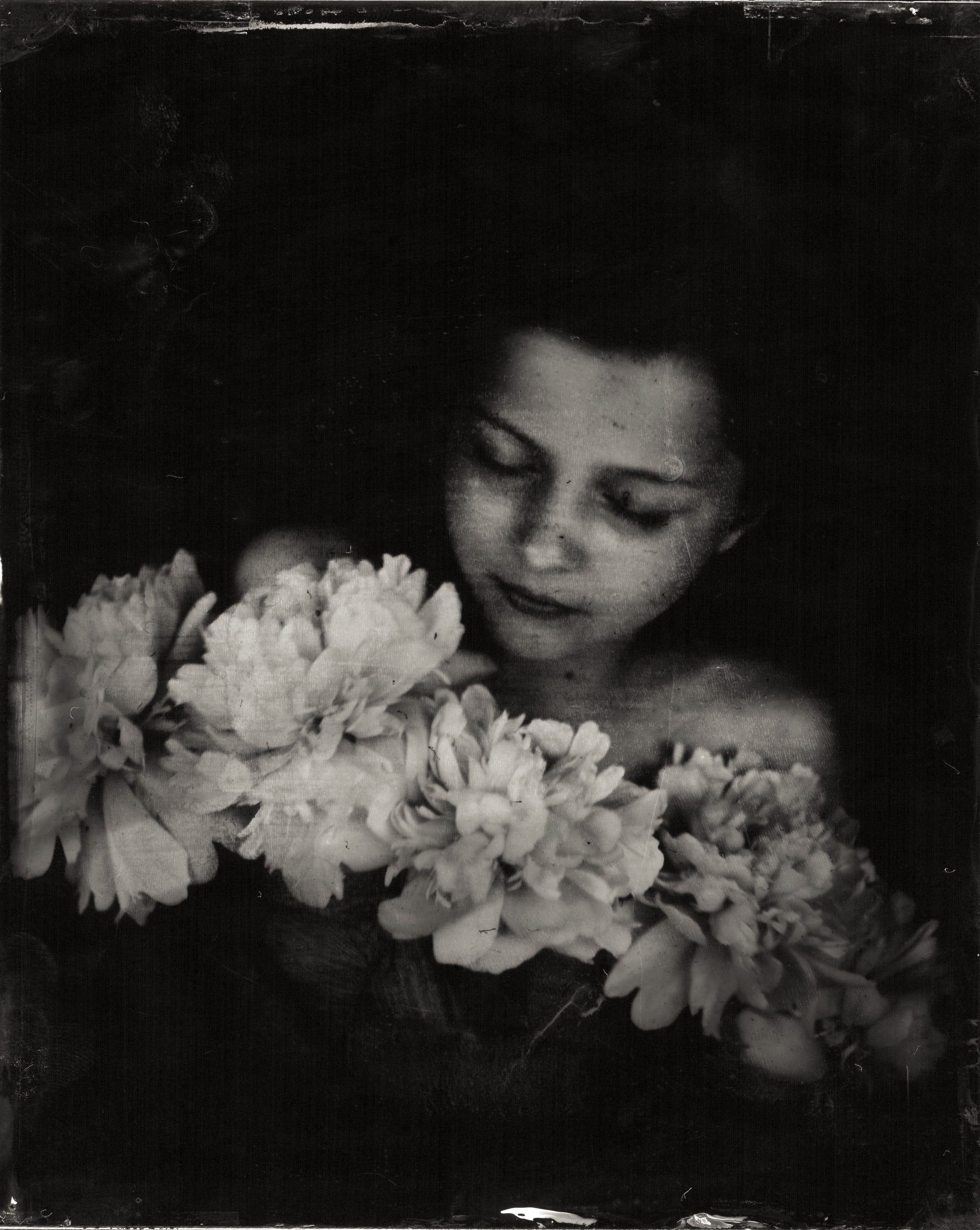
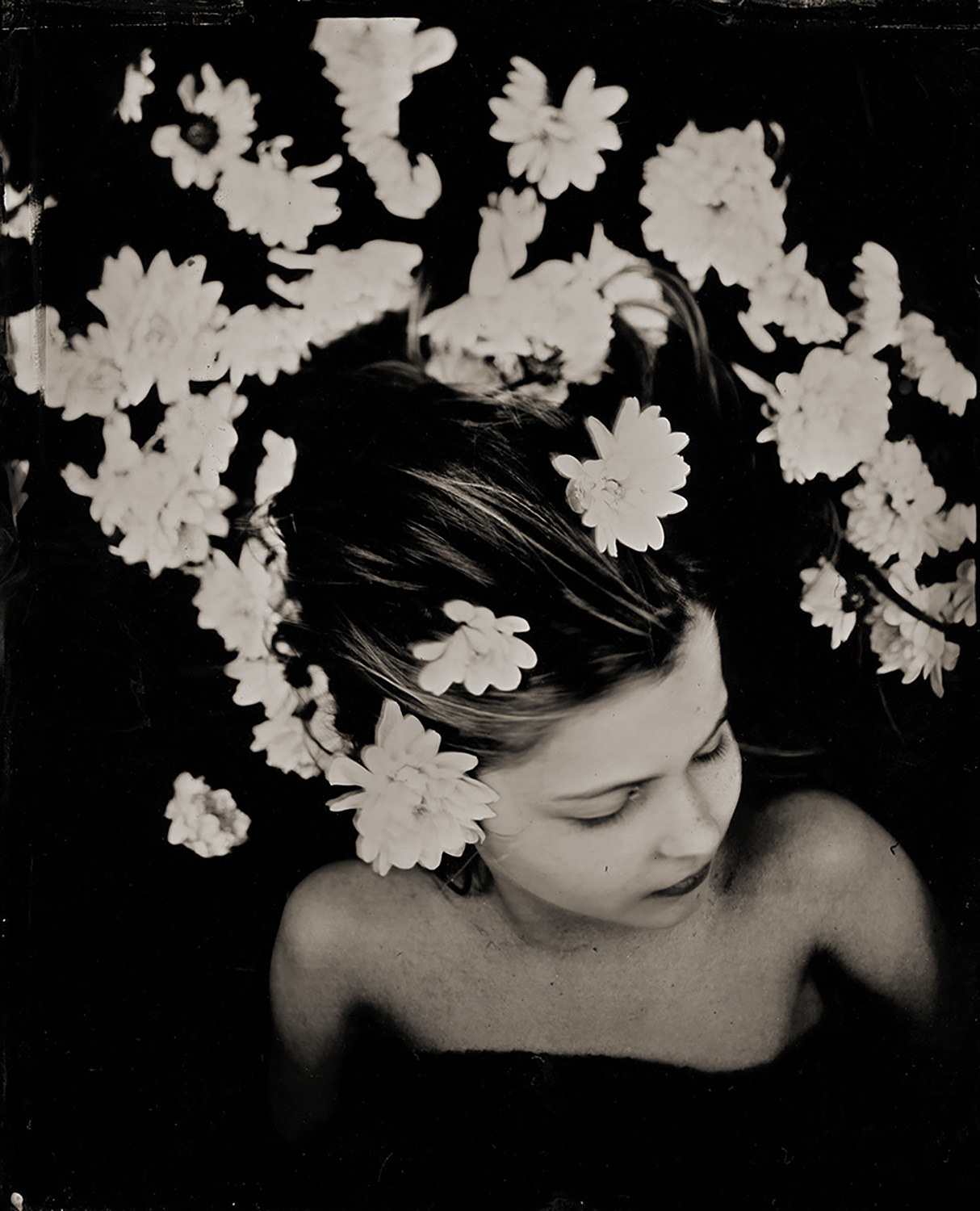
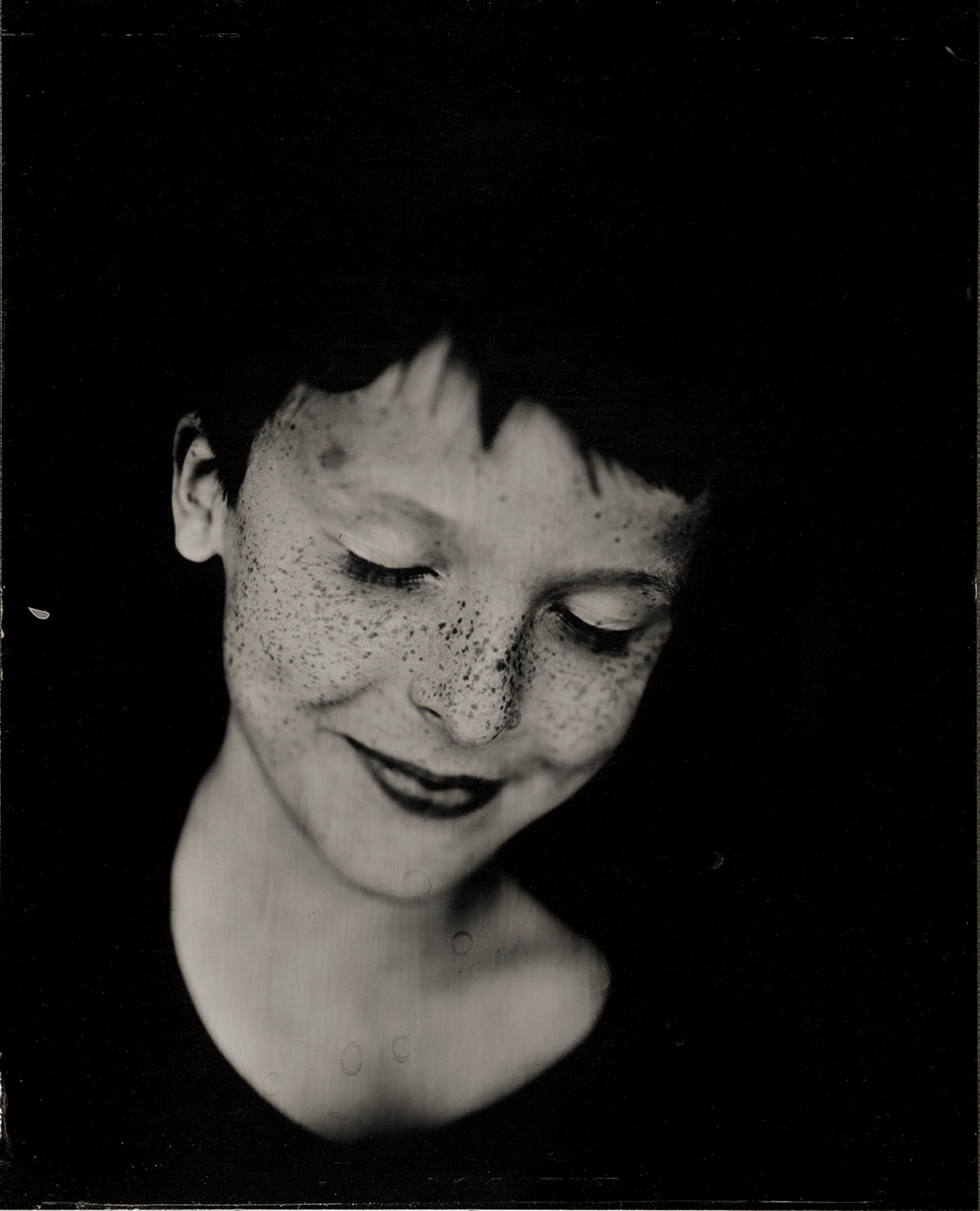
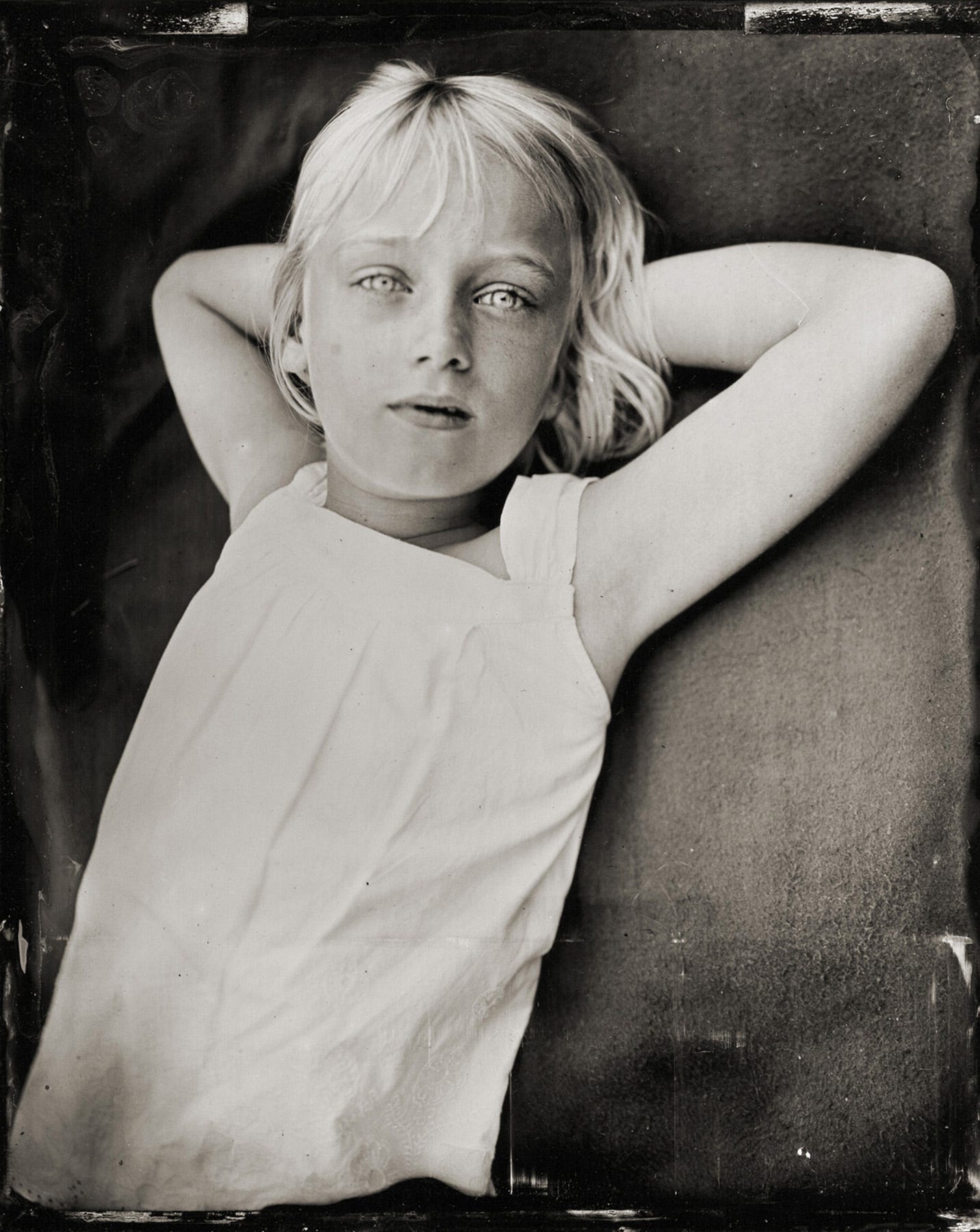
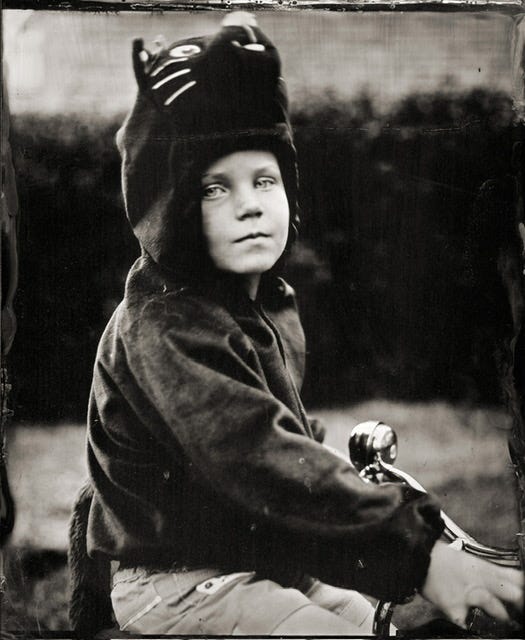
Several years later I made more plates of the children, now teenagers, but unfortunately not all of them. I am still in touch with some and we often talk about the work and have plans to make more of them as adults - but it never quite happens - busy lives for everyone but maybe one day. It is a process that I love. It is infuriating and exhausting but when you see the image appear in the darkroom, it can quite literally take your breath away.
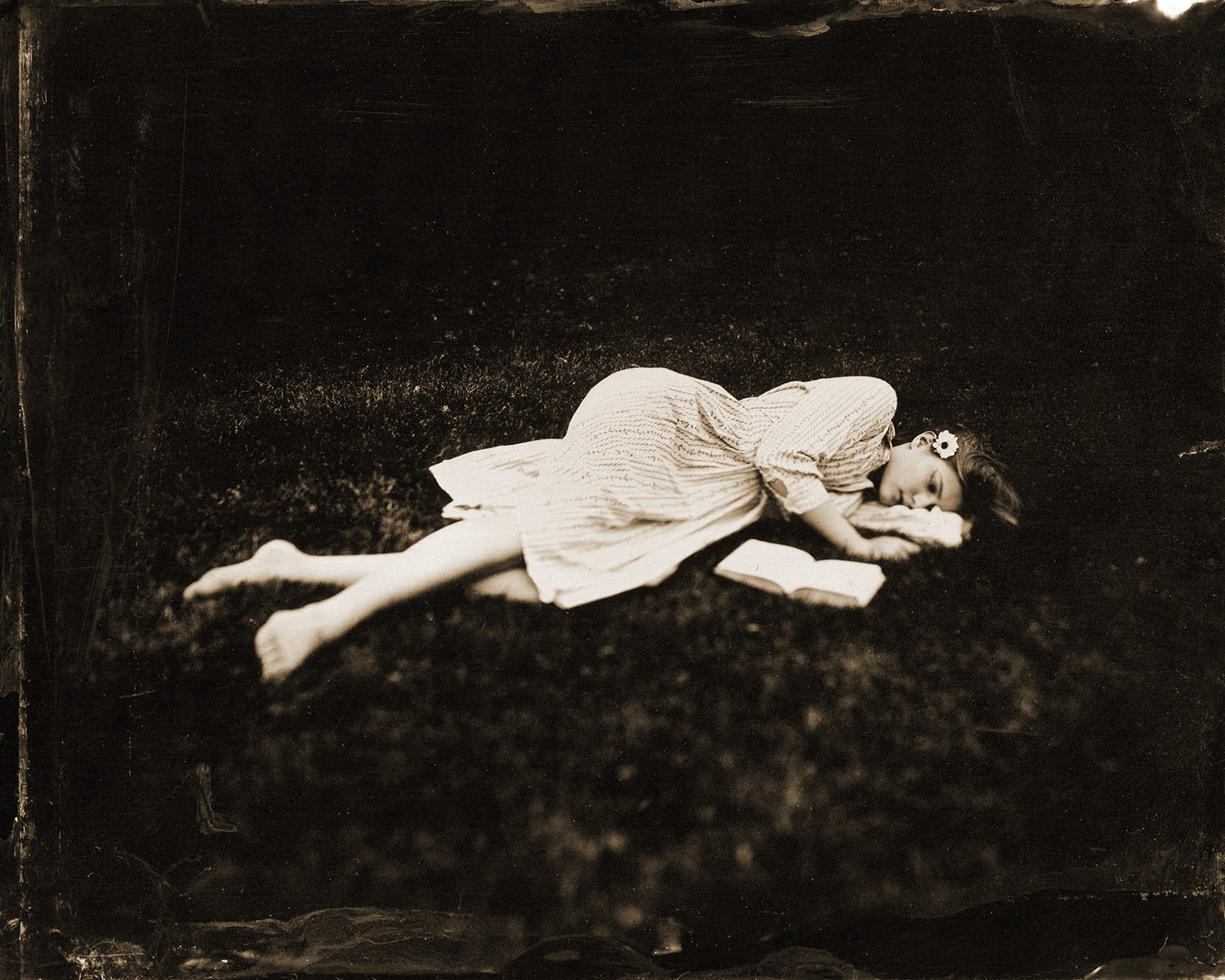
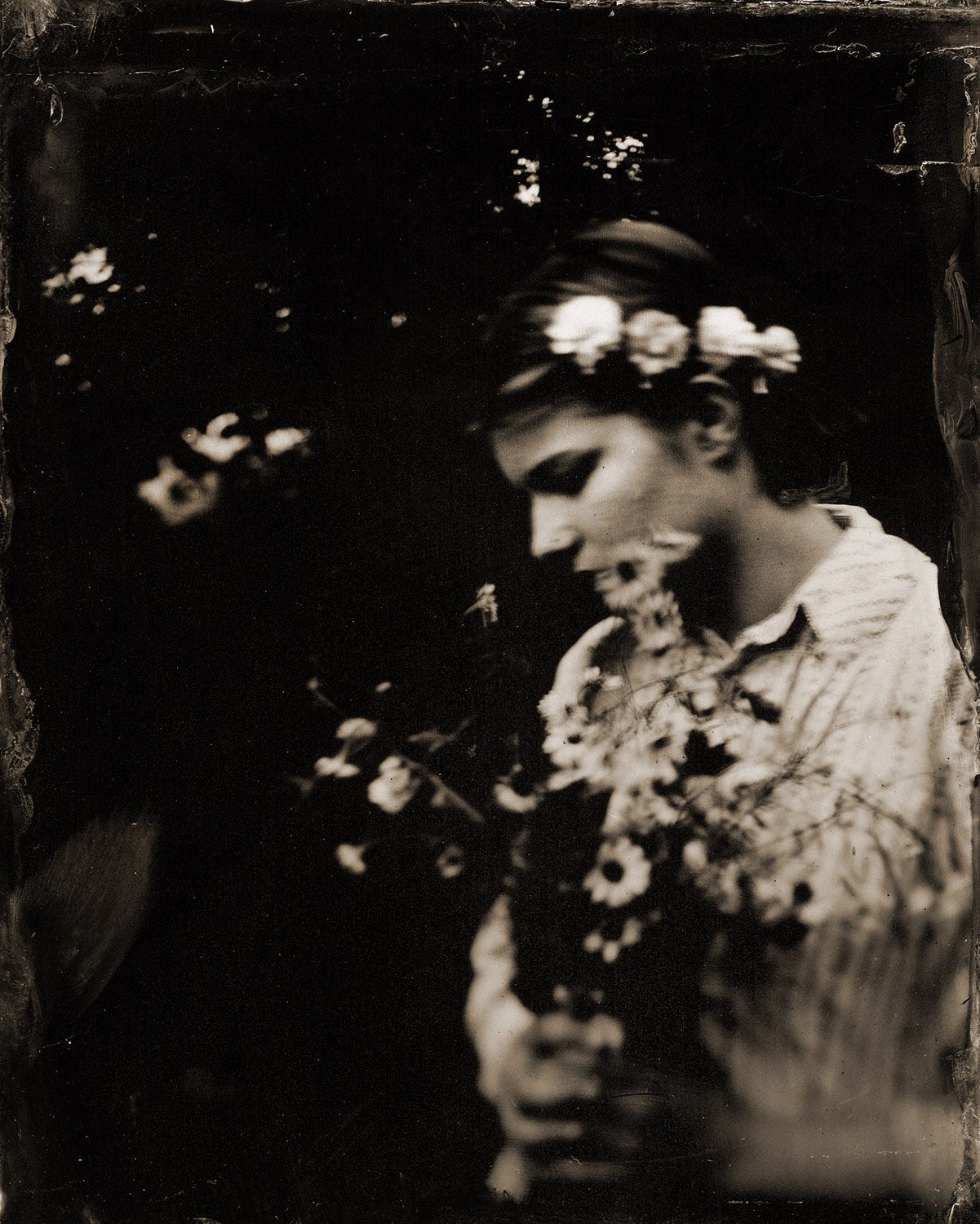
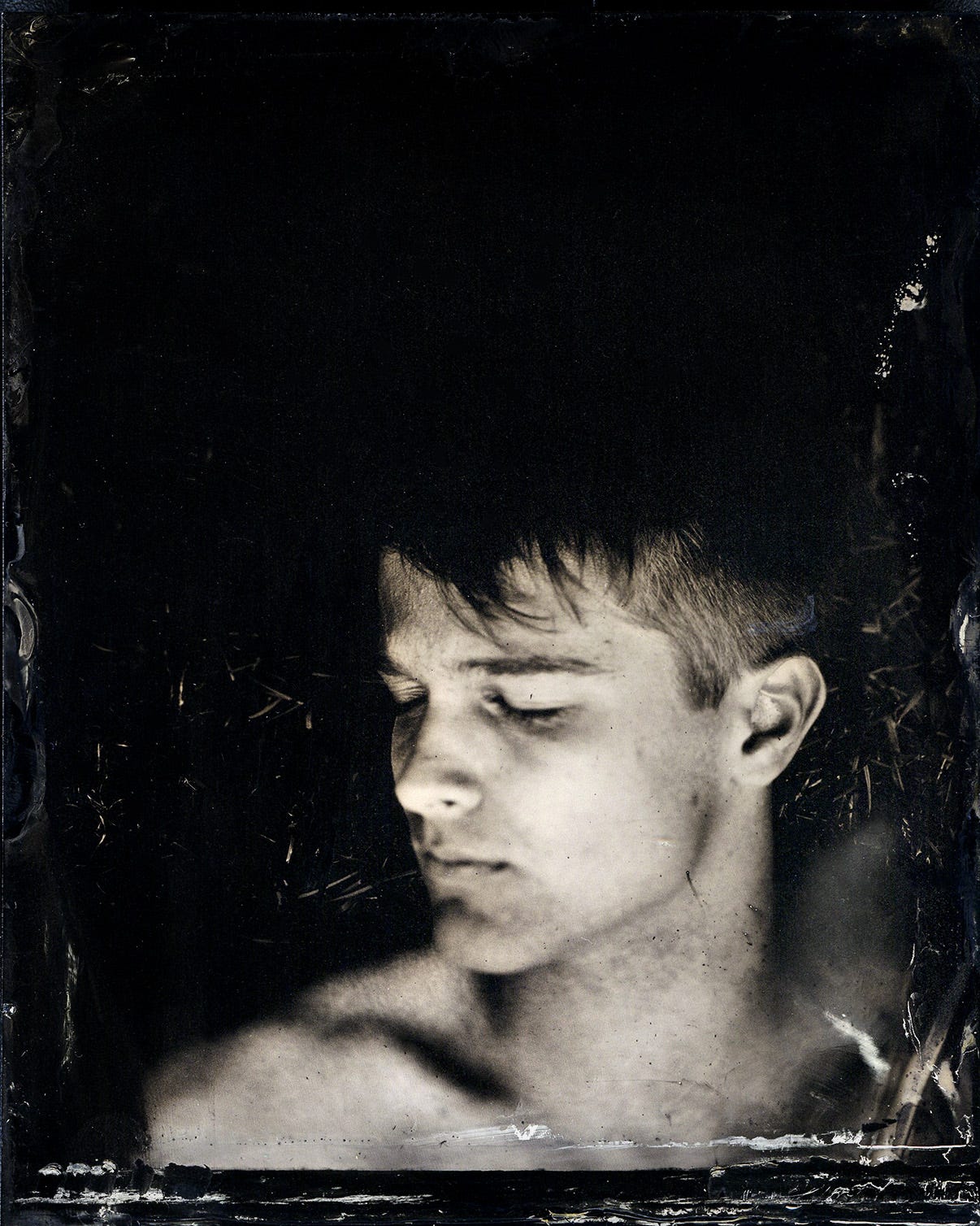
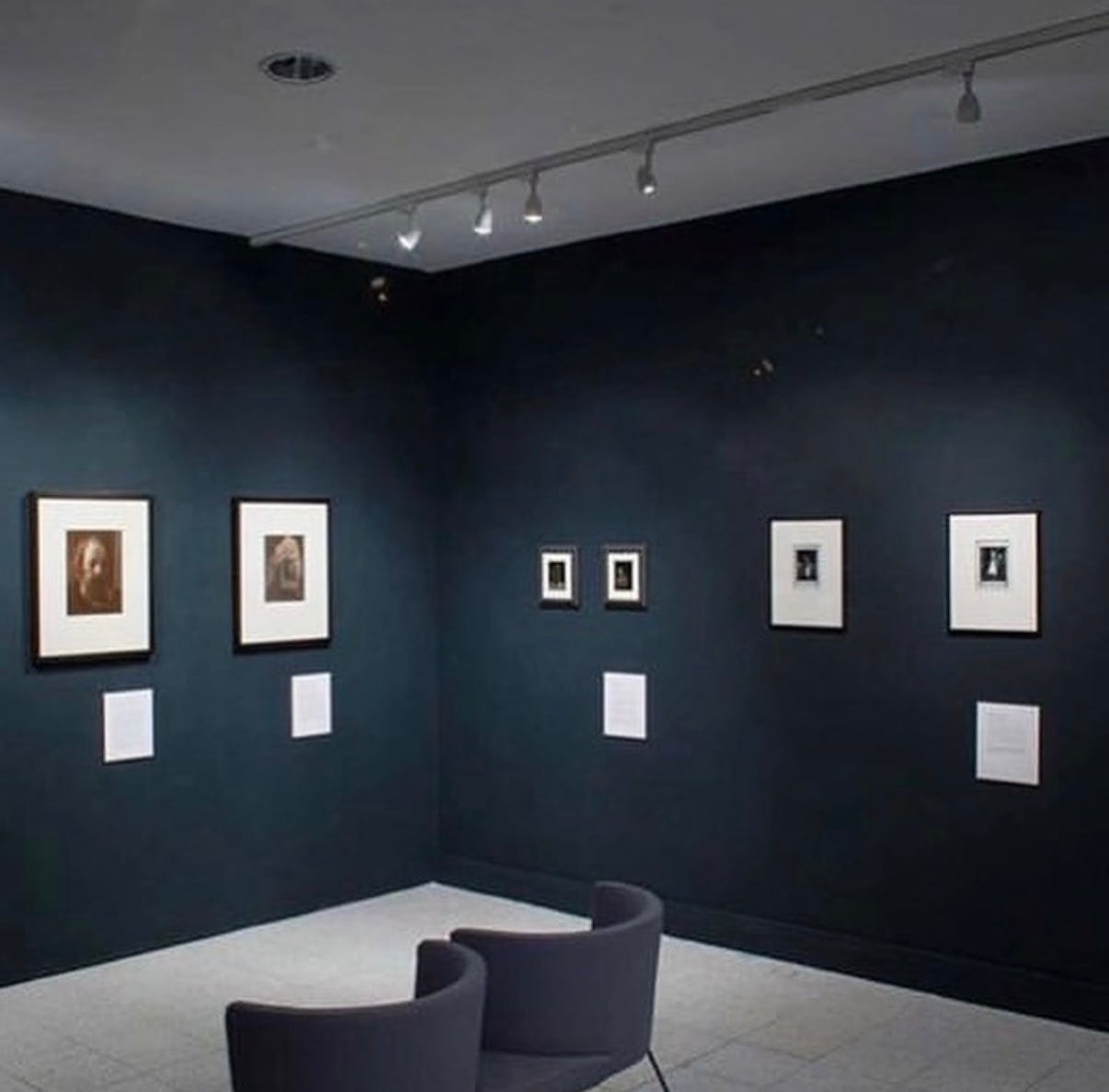
When I think back to the chain of events that led me to becoming a photographer who uses the wet plate collodion process, I feel grateful. From reading a small piece about this pioneering woman photographer and then seeing her work in person, I still find it hard to believe that I too make plates as she did over a century and a half ago. I have been so lucky to have had the experience and the help of family and friends around me. I never imagined I would do this kind of work, let alone be published or have exhibitions (one of which was having my work hang alongside Cameron). It has been a wonderful journey and even today as I sit here writing, I can honestly say that Julia Margaret Cameron is still very important in my life and continues to inspire me - flaws and all.
So interesting, and what a fascinating person to be inspired by, I look forward to learning more.
I can imagine your wonder and frustration, since this process is so much more difficult. But also very rewarding I think! I watched my father in law struggle with collodium prints and also with the difficulty to obtain the materials.
I loved to read your story and see you beautiful pictures. Thank you!